
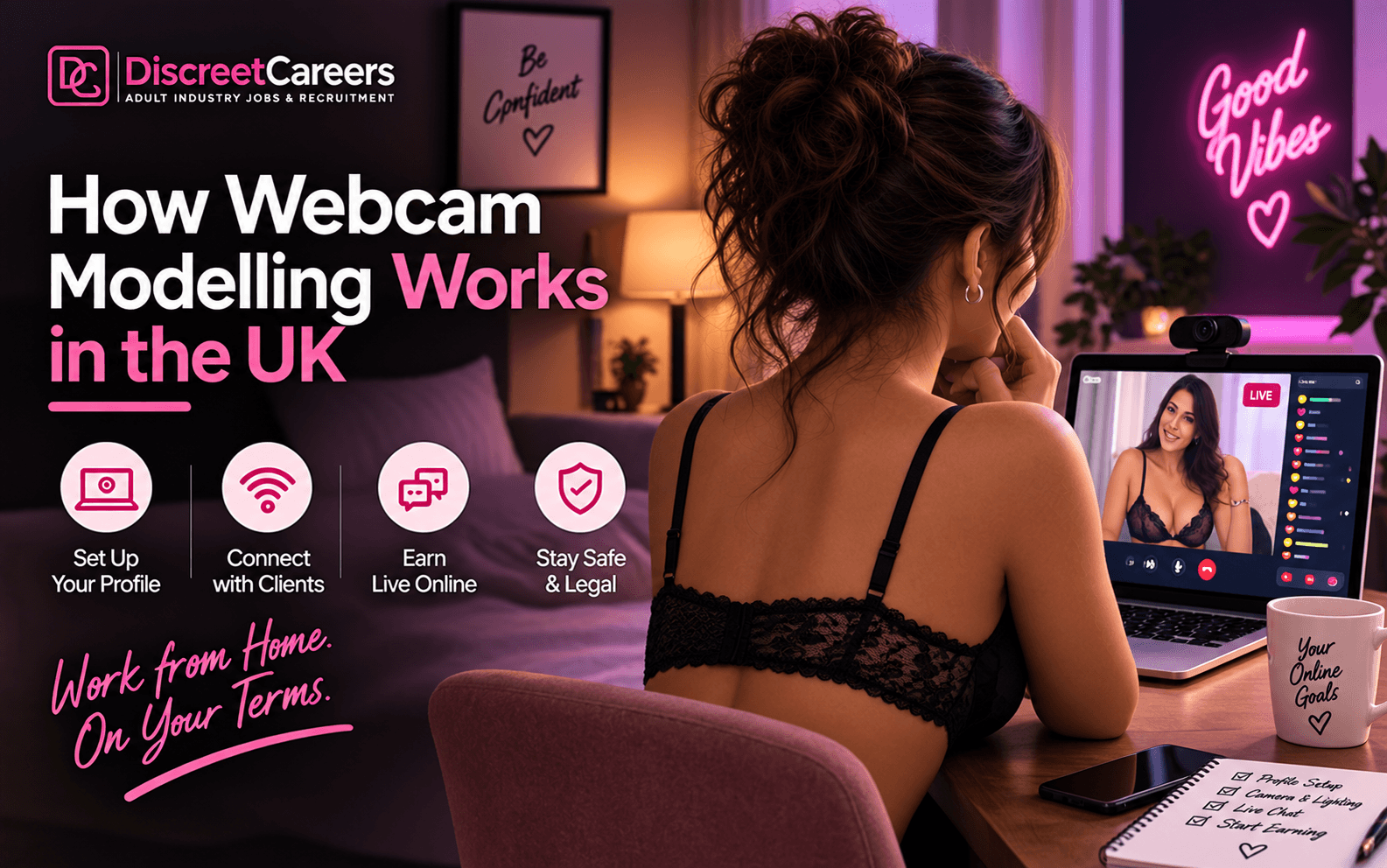
How Webcam Modelling Works
Webcam modelling involves interacting with viewers through live online broadcasts. Depending on the platform or role, this can include live shows, private interactions, chatting and other forms of online content.
The way the work is arranged can vary considerably. Some people work independently through a platform, while others work with a studio or management company. Before applying, it is important to understand what the role involves, how you will be paid and what support or deductions may apply.
What Does a Webcam Model Do?
The exact responsibilities depend on the platform, employer and type of content involved. A webcam model may:
Host live broadcasts for viewers
Chat and interact with members
Take part in private shows or requests
Build and maintain an online profile
Manage their schedule and availability
Promote their profile or content
Follow the platform's rules and content requirements
The type of content and interaction permitted will depend on the platform or employer. Always read the job or opportunity details carefully before applying.
- Chat and interact with members
- Perform live shows on camera
- Receive tips and private requests
- Build your profile and fan base
- Work from home on your terms
Ways to Work as a Webcam Model
There is no single way to enter webcam modelling. The main difference is who provides the platform, equipment, support and promotion, and how the money you earn is divided.
Independent on a Platform
You work directly through a webcam platform and manage your own schedule, profile and day-to-day activity. This can give you more control, but you may also be responsible for your own equipment, promotion, administration and record keeping.Studio-Based
Some webcam models work from a dedicated studio using equipment and facilities provided by the studio. In return, the studio may retain an agreed share of earnings or operate under another payment arrangement.
Check what is included before accepting a position, including equipment, working hours, payment arrangements and any deductions.
Remotely Managed
Some arrangements allow you to work from home while a studio or management team provides support with areas such as setup, promotion or account management.
If an opportunity involves a revenue share, make sure you understand exactly what the other party provides and how the arrangement can be ended.
Chat & Non-Nude Work
Some platforms and categories focus on conversation, companionship, fetish niches or clothed content. Limits vary by platform, and you set your own on top of them.Live Plus Content
Webcam work is not limited to one type of format. Depending on the platform, opportunities may include live streaming, private interactions, chatting, subscriptions, recorded clips or other online content.
The rules and payment arrangements can differ significantly between platforms, so check the specific opportunity rather than assuming all webcam work operates in the same way.
Good to know: Most people camming are self-employed rather than employed — no holiday pay, no sick pay, no notice period, and you register with HMRC and set money aside for your own tax and National Insurance. Every legitimate platform will also verify your age with photo ID before you can broadcast. That is a legal requirement and a good sign, not a red flag.
What You Need to Get Started
Employers typically look for:
- To be 18 or over
- Suitable identification for age or identity verification
- A reliable internet connection
- A suitable webcam or camera
- Adequate lighting and sound
- A private space where you can work comfortably
- A device that meets the platform's technical requirements
- An understanding of the platform's rules and content policies
How Pay Works
Webcam modelling does not usually involve a standard hourly wage. Depending on the platform or employer, earnings may come from viewer tips, private interactions, subscriptions, content sales or other forms of paid engagement.
The amount you receive can depend on:
The platform's payment structure
The percentage or commission retained
The number of viewers and level of engagement
The hours you work
Any studio or management arrangement
Payment processing fees or other deductions
Before starting, check exactly how your earnings are calculated and when payments are made. If you are working through a studio or management company, make sure you understand what percentage you receive and what services are included.
Advertised earnings should not automatically be treated as guaranteed income. Ask whether figures are examples, estimates or based on particular levels of activity.
If you are working independently, keep your own records of income and expenses and check the current UK tax rules that apply to your circumstances.
Benefits of Webcam Modelling
- Flexible working: Some arrangements allow you to choose when you work.
- Home-based work: Depending on the opportunity, you may be able to work from your own space.
- Control over your schedule: Independent models can often choose their availability.
- Different working arrangements: You can explore platform, studio or management-based options.
- Online working: The role does not necessarily require commuting to a traditional workplace.
Tips for Success
- Create a friendly and engaging profile
- Invest in good lighting and sound
- Be consistent and show up regularly
- Interact with your audience
- Promote your room on social media
- Always prioritise your safety and privacy
Safety & Privacy
Privacy is the part of this job you control most, so set it up before your first broadcast rather than after:
- Separate everything. A working name, a dedicated email address, separate social accounts and, where you can, a separate phone number — none linked to your legal name.
- Check what is in shot. Post, parcels, a distinctive view from a window, a uniform or even a reflection can identify you. Watch your own stream back before going live.
- Use the tools. Country and region blocking, banning users, disabling recording where the platform allows it, and occasionally reverse image searching your own photos.
- Never share personal details — address, workplace, legal name, bank details or travel plans — however regular a viewer is. Use a PO box for anything posted to you.
- Verify who you work with. Check a studio has a real address and a company registration, ask to speak to models already working there, and tell someone you trust where you are going if you visit.
- Never pay to work. Legitimate platforms and studios do not charge joining, verification or promotion fees.
- You can always say no. Refusing a request, ending a show early or blocking someone is your right, with no explanation owed. Keep screenshots and report anyone who pressures, threatens or tries to blackmail you.
Career Progression
Progress in camming comes mostly from consistency. Models who set a schedule and stick to it build returning viewers, and returning viewers are what turn an unpredictable few weeks into steadier work. Expect the first months to go on learning what your audience responds to and finding the hours that suit you.
The usual next step is diversifying — adding clip sales, a subscription page or custom content so you are not dependent on one platform's traffic or its rules. Some models move to a studio for better equipment and support; others negotiate a better split once they have figures to show. Treating it as a small business, with records, a schedule and a plan for quiet periods, is what separates a short stint from something sustainable.
It is worth thinking early about where this leads. The skills transfer further than people expect: bookkeeping and self-employment, marketing and audience building, video and lighting, customer service under pressure. Experienced models move into studio management, coaching new models, content production, or platform support and moderation. Keep your finances and your working identity separate and in order, so that changing direction later is a choice rather than a scramble.
Frequently Asked Questions
What equipment do I need for webcam modelling?
Requirements vary, but you will generally need a suitable camera or webcam, reliable internet, a computer or compatible device, and adequate lighting and sound. Check the technical requirements of the platform or employer before investing in equipment.
How is webcam modelling pay calculated and when is it paid?
Payment structures vary. Earnings may come from tips, private interactions, subscriptions, content sales or other paid activity. Check the platform or employer's terms for commission, deductions, minimum withdrawal amounts and payment schedules before starting.
Am I employed or self-employed as a webcam model?
It depends on the arrangement. Some people work independently, while others may work through a studio or another business arrangement. Do not assume your employment status from the job title alone. Check the terms of the specific opportunity and the rules that apply to your circumstances.
Do I have to pay to join a webcam platform or studio?
You should understand any fee before agreeing to it. Be cautious about unexpected requests for money to secure a job, complete verification or access work. If a vacancy asks for an upfront payment, make sure you understand exactly what it is for and whether it is genuinely required.
Do I need experience to apply for webcam modelling jobs?
Not always. Some opportunities may be suitable for people without previous experience, while others may have specific requirements. Read the vacancy carefully to see whether experience is required, preferred or not mentioned.
Is my privacy protected when webcam modelling?
Platforms may provide privacy and security features, but no online service can guarantee complete privacy. Use available blocking and privacy controls, avoid sharing identifying information and understand how your content may be recorded or shared before you start.
Ready to Start Your Webcam Modelling Career?
Browse current webcam and cam model vacancies on Discreet Careers and compare the role, requirements, working arrangements and advertised pay before applying.